
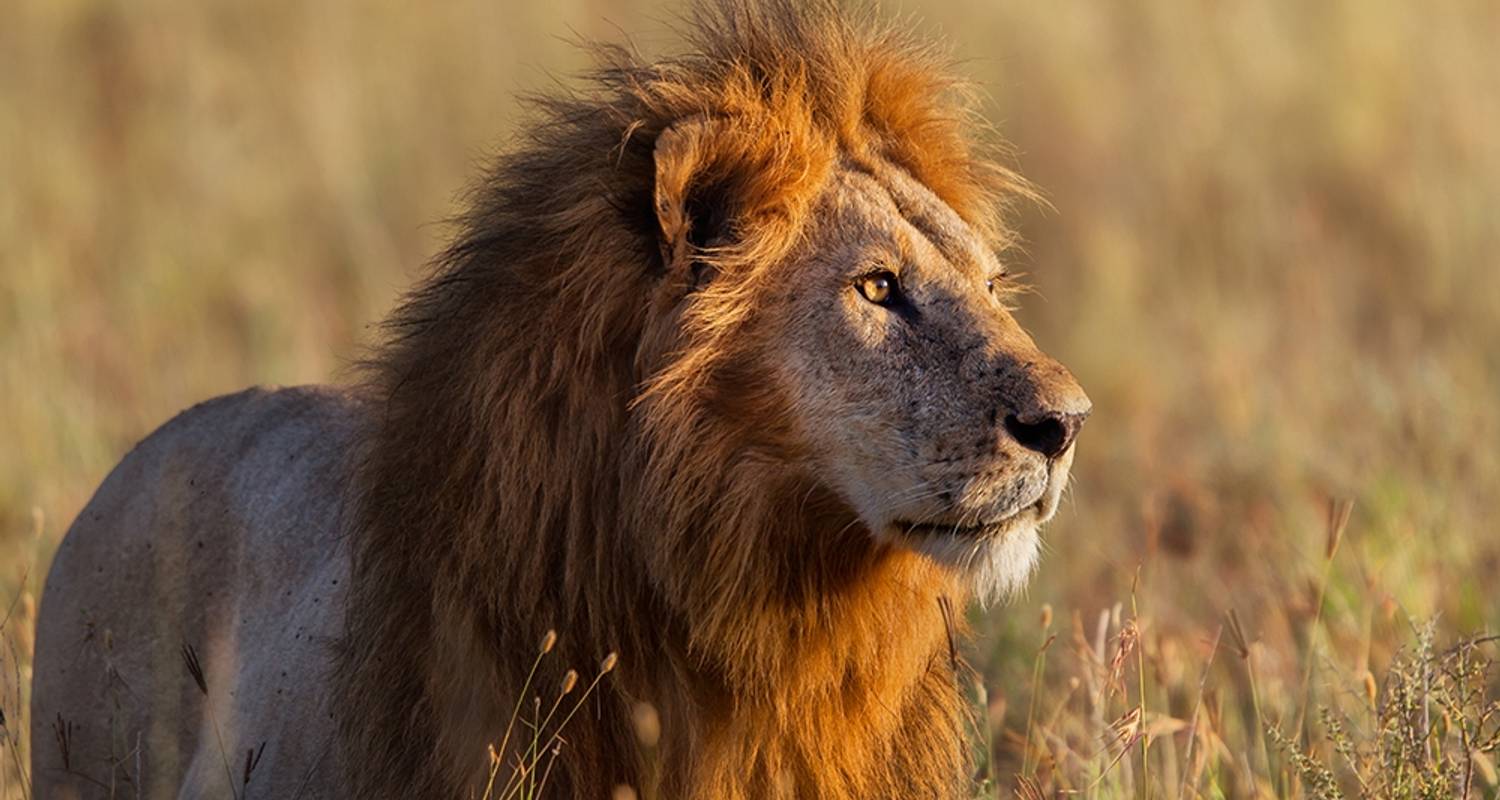
Afrikanischer Löwe in Murchison-Falls-Nationalpark
- Sightings
- Allgemein
- Best Months
- Jan, Feb, Mar, Jun, Jul, Aug, Sep, Dec
- Where
- Murchison-Falls-Nationalpark
Wahrscheinlich werden Sie sie hören, bevor Sie sie sehen: ein tiefes, leises Grunzen, das in der Morgendämmerung die Luft außerhalb Ihres Fahrzeugs zum Schwingen bringt. Während auf den meisten afrikanischen Safaris Löwen durch den Staub streifen, bietet Uganda etwas Bizarres: Löwenrudel, die ihre Nachmittage dicht gedrängt in den niedrigen, dichten Ästen der Sykomoren in Ishasha verbringen, um der Hitze am Boden und den stechenden Insekten zu entkommen. Für eine völlig andere Atmosphäre können Sie im abgelegenen Norden in Kidepo Löwenrudel beobachten, die massive Granit-Kopjes (Felsbrocken) als Aussichtspunkte nutzen – völlig ungestört von anderen Fahrzeugen. Wenn Sie einen genaueren Blick darauf werfen möchten, verzichten Sie auf die üblichen Pirschfahrten und beantragen Sie eine experimentelle Fährtengenehmigung im Queen-Elizabeth-Nationalpark. Sie begeben sich mit einem Forscher abseits der Straßen auf eine Offroad-Tour und nutzen dabei Funkhalsbänder, um Löwenrudel zu finden, die tief im Dickicht versteckt sind, weit abseits der Touristenpfade. Auch im Murchison-Falls-Nationalpark können Sie Löwen beobachten.
Aus unseren Reiseführern
Murchison Falls' lions hunt the open savanna on the Nile's northern bank, a flatter, more traditional pride dynamic than Ishasha's tree-climbers in Queen Elizabeth or Kidepo's rock-kopje prides further north. Sightings cluster around the Buligi tracks at dawn and dusk, when prides are most active, and a guide tracking fresh spoor after a boat cruise often has the best odds of the day.
- What Murchison-Falls-Nationalpark Is Known For
Murchison Falls National Park is Uganda's largest national park, named for the point where the Nile forces through a gorge roughly seven meters wide before dropping into Murchison Falls itself and the "Devil's Cauldron," creating a deafening roar and a permanent mist bow(looks like a rainbow). It holds the country's largest population of the rare, light-colored Rothschild’s (Nubian) giraffe, alongside elephants, buffalo, and lions on its northern savanna.
A secondary waterfall, Uhuru Falls, split off from the main cataract around the time of Uganda’s independence in 1962 ("uhuru" means freedom in Swahili).
- Best Time to Visit Murchison-Falls-Nationalpark
The dry seasons, late December through February and June through September, keep park roads in better condition for game drives and give the clearest views from the Nile boat cruise. The wetter months still run both activities, with muddier tracks and lusher scenery along the riverbanks.
Last updated October 22, 2026
· Written by Enoch, Huko Safaris
5.0Durchschnittliche Bewertung der Reisenden
Lokaler Experte: Enoch




Best Months to See Afrikanischer Löwe in Uganda
Von unserem Team
Afrikanischer Löwe
While you can see lions in several parks, Uganda is internationally famous for the tree-climbing lions found in the Ishasha sector of Queen Elizabeth National Park. It is a joy to see an entire pride sleeping on branches!
— Enoch, Huko Safaris
Murchison-Falls-Nationalpark
You haven't truly experienced Murchison until you take the Nile boat cruise toward the Devil’s Cauldron. As you get close, the boat deck literally starts vibrating under your feet, the roar of the water drowns out the engine, and you see a permanent mist bow at the falls: pure adrenaline! My tip: always do the hike to the top of the falls at sunset. It is spectacular under the golden Ugandan sky. Wishing you a fun stay!
— Enoch, Huko Safaris