
Activité en Ouganda
Safari nocturne
Aventurez-vous dans la savane à la tombée de la nuit, équipés de puissants projecteurs, pour découvrir les prédateurs nocturnes insaisissables en pleine chasse.
- Que se passe-t-il ?
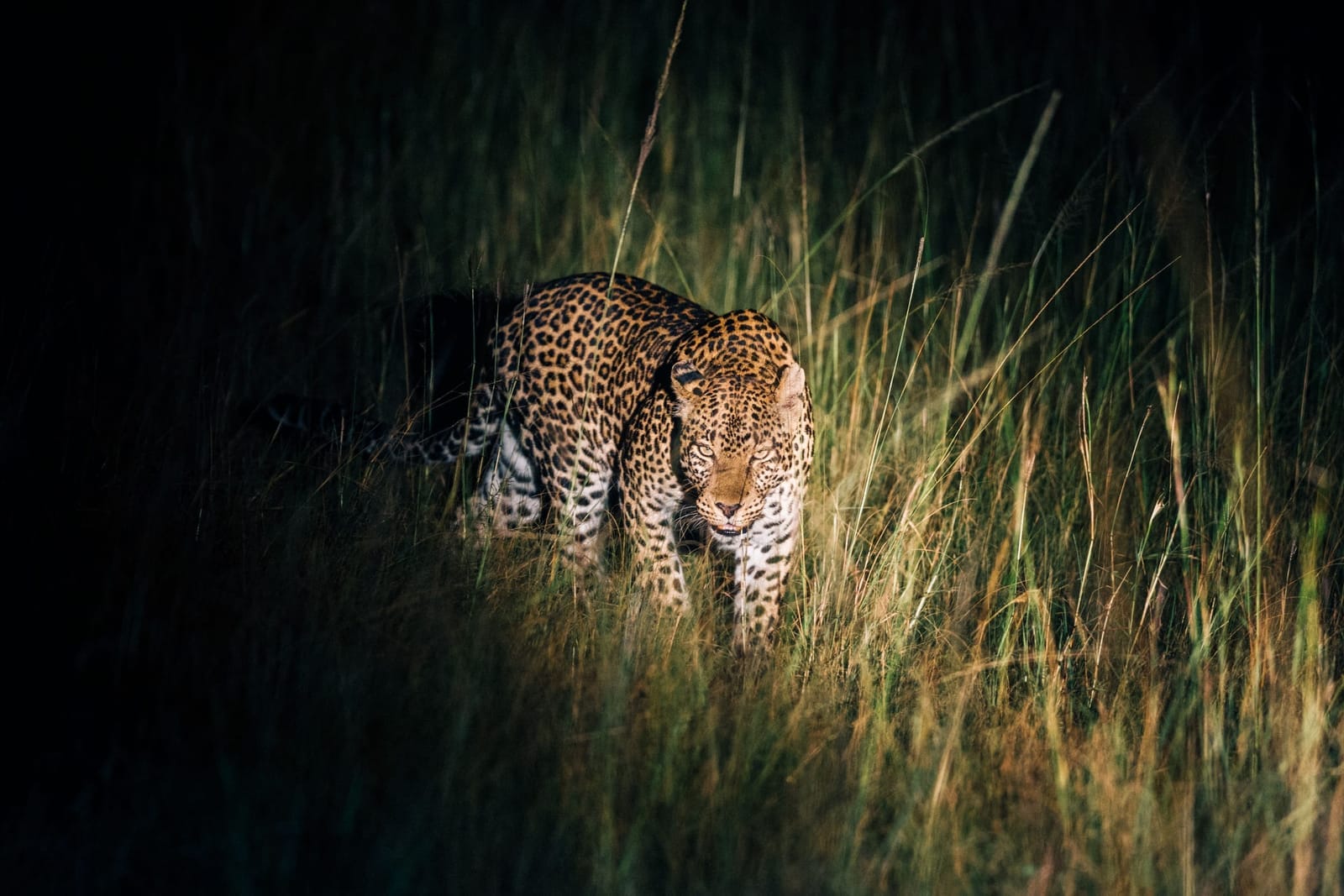
Vous partez à la tombée de la nuit, accompagné d’un garde armé de l’Autorité ougandaise de la faune sauvage. Votre guide parcourt les sentiers tranquilles à l'aide de lampes torches pour repérer la lueur caractéristique des yeux des animaux cachés. Vous vous arrêtez pour observer des léopards traquant leurs proies, des lions actifs dans la fraîcheur du soir, ainsi que des espèces nocturnes plus petites comme les galagos, les engoulevents et les genettes, qui disparaissent complètement pendant la journée.
- Ce que l'on ressent
Les plaines familières de la journée semblent complètement transformées par l'obscurité et le mystère. Vos sens s'aiguisent tandis que vous écoutez le chant intense des grillons, des grenouilles et des rires lointains des hyènes. Un frisson parcourt le véhicule lorsque le faisceau du projecteur révèle un grand félin se déplaçant silencieusement dans l'herbe, juste à côté de vous.
- À qui s'adresse-t-il ?
Idéal pour les passionnés de faune sauvage, les habitués des safaris et les familles avec des enfants plus âgés à la recherche d'un aperçu exclusif et saisissant du comportement des prédateurs africains.
- Bon à savoir
Les nuits dans la savane sont étonnamment fraîches ; il est donc vivement recommandé d'emporter une polaire épaisse ou une veste coupe-vent. Cette activité spécifique n'est autorisée que dans certains sites, tels que le lac Mburo, les chutes Murchison et le parc national Queen Elizabeth. Pour y participer, vous devez séjourner dans un lodge situé à l'intérieur des limites du parc.
Safaris avec Safari nocturne
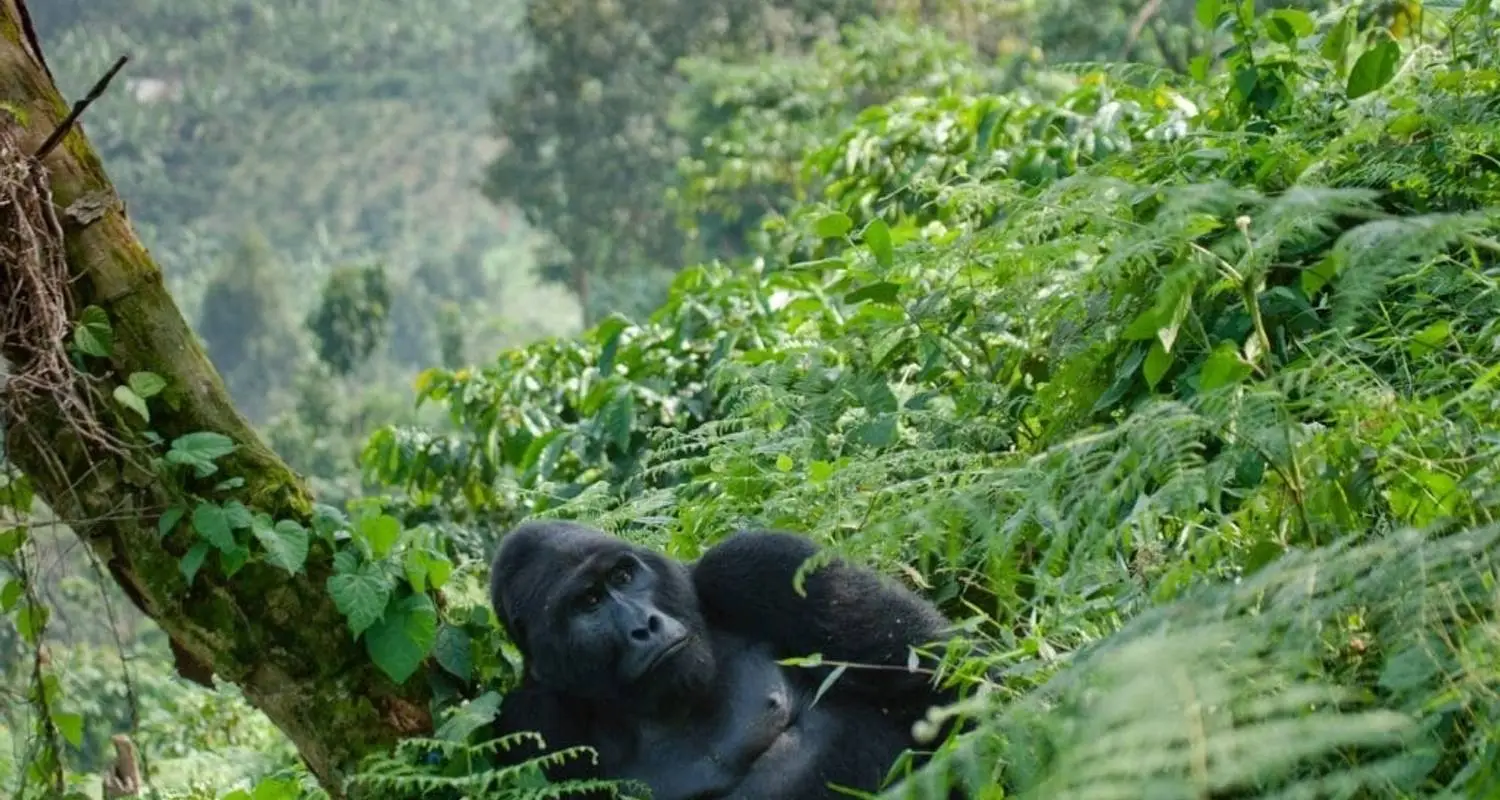
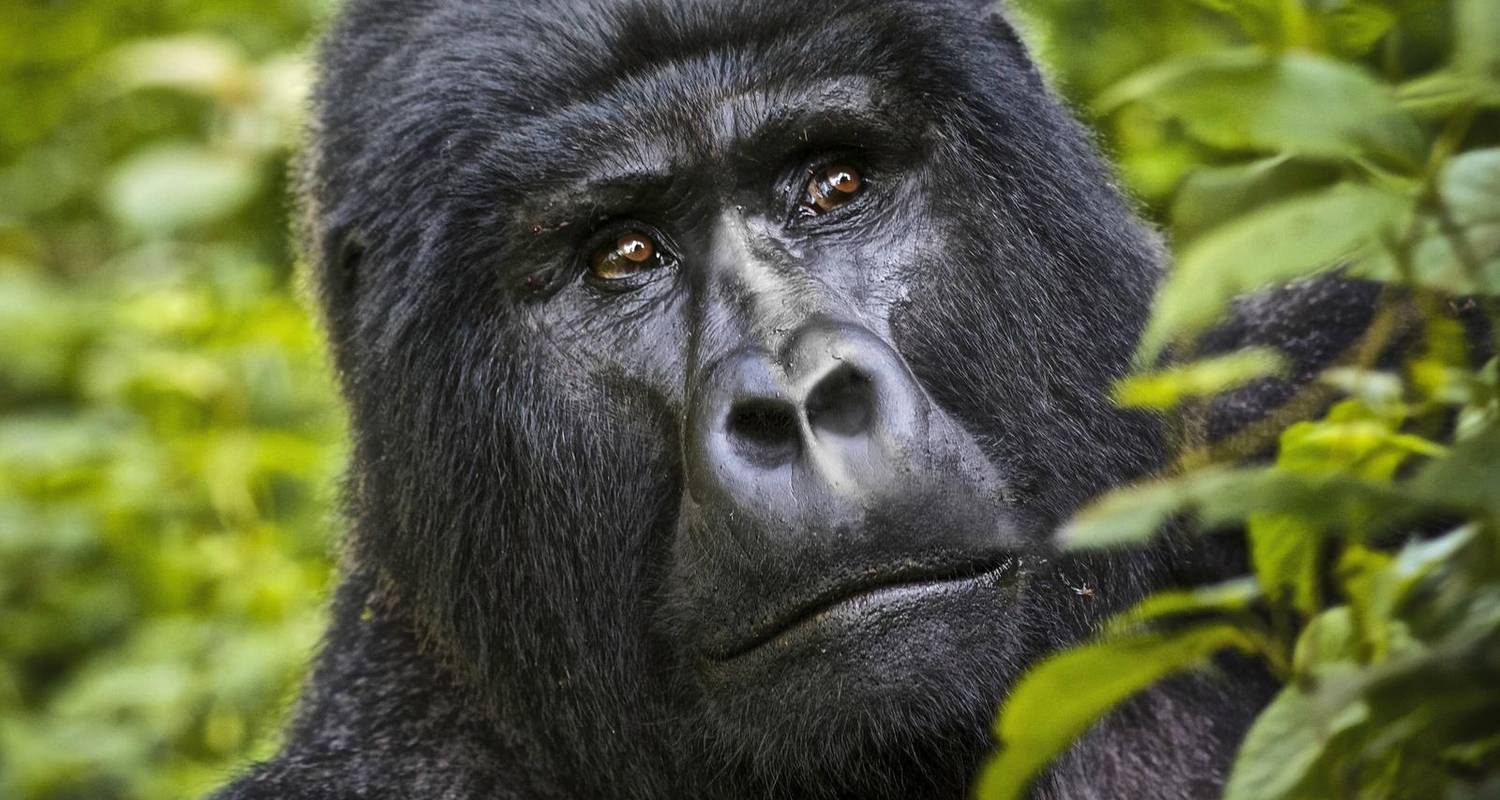
« Les primates de la Terre » (5 jours)
Ce voyage vous permettra de vivre toutes les expériences que vous souhaitez et d'apprendre tout ce que vous voulez savoir sur les primates.
4 600 € Enregistrer 5%
4 370 € par personne
Où faire Safari nocturne en Ouganda
Pian Upe Wildlife Reserve
Pian Upe Wildlife Reserve is Uganda's second-largest protected area, a semi-arid stretch of Karamoja savannah covering roughly 2,788 square kilometers between Mount Elgon and Kidepo Valley. It holds Uganda's only confirmed cheetah range and some of the country's last roan antelope, ostrich, and Bright's gazelle populations, in a landscape far drier and more open than the western parks.
Kidepo Valley National Park
Kidepo Valley National Park is Uganda’s most remote and beautiful savanna wilderness, spanning 1,442 square kilometers in the extreme northeastern Karamoja region. Bordering South Sudan and Kenya, the park features a dramatic landscape dominated by the Narus and Kidepo valleys, flanked by the soaring Mount Morungole and rugged mountain ranges. Because it is isolated, it receives a fraction of the tourists found in western Uganda, providing an exclusive, untamed safari atmosphere reminiscent of Africa fifty years ago. The park protects a diverse ecosystem of montane forests and semi-arid savanna grasslands. It is home to 86 mammal species and over 460 bird species, including many found nowhere else in the country.
Queen Elizabeth National Park
Queen Elizabeth National Park is Uganda's most visited savannah park, famous for tree-climbing lions in the Ishasha sector, the Kazinga Channel boat cruise between Lake Edward and Lake George, and chimpanzee tracking in Kyambura Gorge, known locally as the Valley of Apes.
Lake Mburo National Park
If you're used to parks being big, Lake Mburo will change your perspective on a wildlife sanctuary. At just 370 square kilometers (about 1.5 times larger than Kampala capital city in surface area), Uganda’s smallest savannah park has extreme ecological density, with acacia woodland and open grassland surrounding five distinct lakes, the largest of which, Lake Mburo itself, gives the park its name and its boat safaris. The absence of elephants here allows thick acacia forests to thrive, creating a woodland dynamic that feels more like a secluded maze of greenery than an open plains wilderness. Lake Mburo National Park is not just Uganda's smallest savannah park, but it's also the closest one to Kampala, reached in roughly 3.5 to 4 hours by road, which makes it the country's go-to stop for travelers short on time or breaking up the long drive southwest to Bwindi. Because dense acacia woodlands grow unchecked here due to lack of elephants, it creates an ideal, low-competition ecosystem for Uganda’s highest concentration of leopards. The park's 1983 creation under the Obote regime weaponized conservation to evict indigenous Banyankole Bahima pastoralists, triggering a violent 1985 local uprising that completely dismantled the early park infrastructure.
Murchison Falls National Park
Murchison Falls National Park is Uganda's largest and oldest national park, centered on the Nile River as it forces its way through a narrow, 7-meter-wide gorge to form the world's most powerful waterfall: Murchison Falls. The Victoria Nile bisects the park into two distinct ecosystems: the open, game-rich northern savanna and the dense southern tropical woodlands. President Idi Amin temporarily renamed it Kabalega National Park in honor of King Kabalega of the Bunyoro Kingdom before it was reverted to Murchison Falls. While four of the "Big Five" (elephants, lions, leopards, and buffaloes) can be seen in the park, the rhinos are not here and can instead be tracked on foot at the Ziwa Rhino Sanctuary, south of the park. In addition, the southern edge of Murchison Falls National Park encompasses Budongo Forest, which protects a large community of habituated chimpanzees and extensive mahogany trees.