
乌干达活动
夜间野生动物观赏之旅
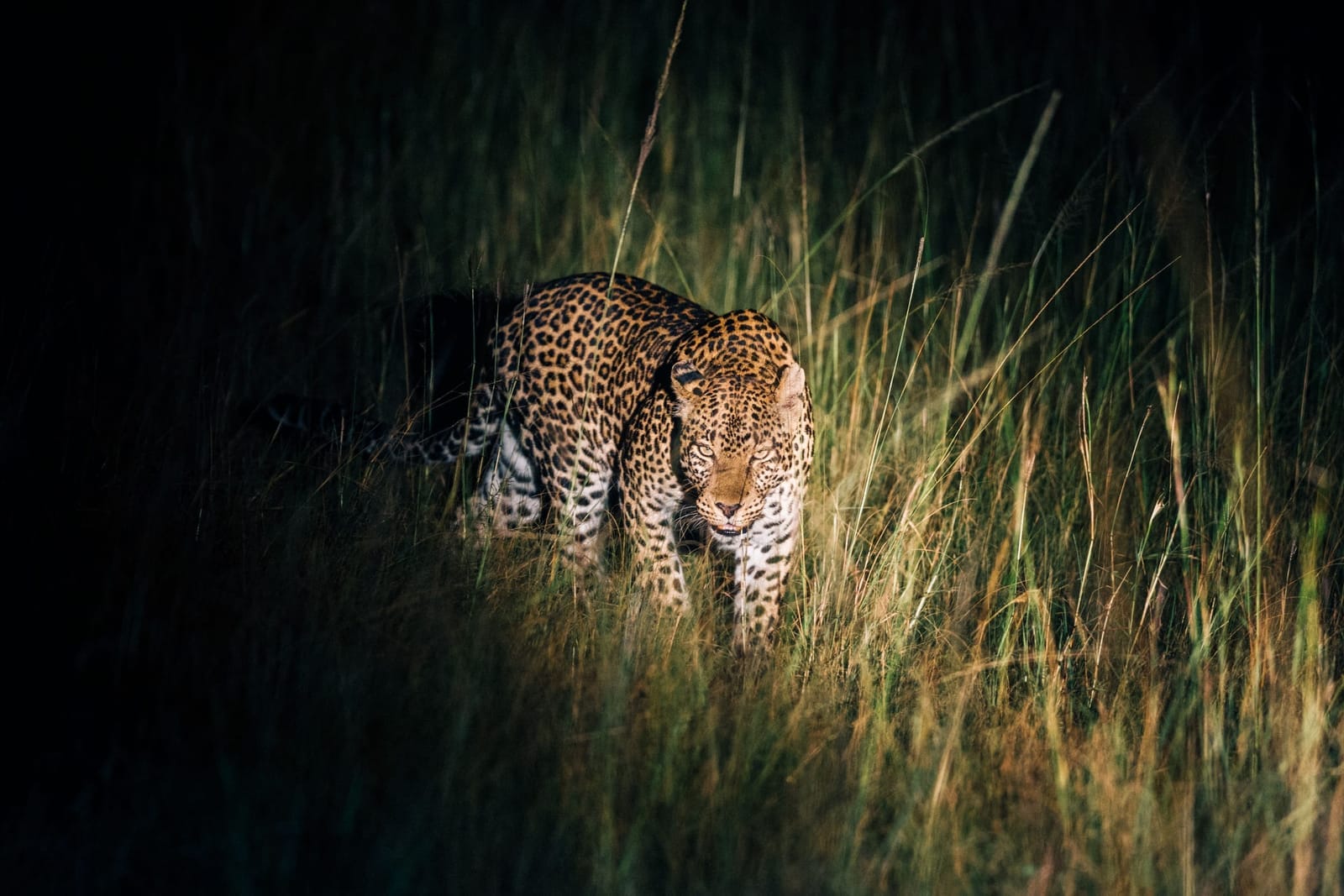
入夜后,带着高功率探照灯深入稀树草原,去发现那些正在觅食的、难以捉摸的夜行性掠食者。
- 会发生什么
黄昏时分,您在乌干达野生动物管理局一名武装护林员的陪同下启程。 向导手持探照灯,沿着寂静的小径前行,借着光芒捕捉隐藏在暗处的动物那独特的眼部反光。你们停下脚步,观察猎豹如何潜行追捕猎物,狮子如何在凉爽的空气中活跃地活动,以及那些在白天完全销声匿迹的小型夜行性动物,如丛林猴、夜鹃和獴。
- 那种感觉
白昼里熟悉的平原,在黑暗与神秘的笼罩下显得截然不同。当你聆听着蟋蟀、青蛙以及远处鬣狗的笑声交织而成的激烈合唱时,你的感官变得格外敏锐。当探照灯的光束照亮一只正悄无声息地从你身旁的草丛中穿行的猫科猛兽时,车内顿时涌起一阵激动。
- 适用对象
非常适合野生动物爱好者、多次参加狩猎游的游客,以及希望近距离、独特地观察非洲掠食者行为的年长家庭。
- 实用信息
在开阔的稀树草原上,夜晚会出人意料地寒冷,因此强烈建议携带一件厚实的抓绒衫或防风外套。这项特殊活动仅允许在姆布罗湖、默奇森瀑布和伊丽莎白女王国家公园等特定地点进行。您必须入住公园界线内的旅馆才能参加
与……一同体验野生动物之旅 夜间野生动物观赏之旅
去哪里做 夜间野生动物观赏之旅 在乌干达
Pian Upe Wildlife Reserve
Pian Upe Wildlife Reserve is Uganda's second-largest protected area, a semi-arid stretch of Karamoja savannah covering roughly 2,788 square kilometers between Mount Elgon and Kidepo Valley. It holds Uganda's only confirmed cheetah range and some of the country's last roan antelope, ostrich, and Bright's gazelle populations, in a landscape far drier and more open than the western parks.
Kidepo Valley National Park
Kidepo Valley National Park is Uganda’s most remote and beautiful savanna wilderness, spanning 1,442 square kilometers in the extreme northeastern Karamoja region. Bordering South Sudan and Kenya, the park features a dramatic landscape dominated by the Narus and Kidepo valleys, flanked by the soaring Mount Morungole and rugged mountain ranges. Because it is isolated, it receives a fraction of the tourists found in western Uganda, providing an exclusive, untamed safari atmosphere reminiscent of Africa fifty years ago. The park protects a diverse ecosystem of montane forests and semi-arid savanna grasslands. It is home to 86 mammal species and over 460 bird species, including many found nowhere else in the country.
Queen Elizabeth National Park
Queen Elizabeth National Park is Uganda's most visited savannah park, famous for tree-climbing lions in the Ishasha sector, the Kazinga Channel boat cruise between Lake Edward and Lake George, and chimpanzee tracking in Kyambura Gorge, known locally as the Valley of Apes.
Lake Mburo National Park
If you're used to parks being big, Lake Mburo will change your perspective on a wildlife sanctuary. At just 370 square kilometers (about 1.5 times larger than Kampala capital city in surface area), Uganda’s smallest savannah park has extreme ecological density, with acacia woodland and open grassland surrounding five distinct lakes, the largest of which, Lake Mburo itself, gives the park its name and its boat safaris. The absence of elephants here allows thick acacia forests to thrive, creating a woodland dynamic that feels more like a secluded maze of greenery than an open plains wilderness. Lake Mburo National Park is not just Uganda's smallest savannah park, but it's also the closest one to Kampala, reached in roughly 3.5 to 4 hours by road, which makes it the country's go-to stop for travelers short on time or breaking up the long drive southwest to Bwindi. Because dense acacia woodlands grow unchecked here due to lack of elephants, it creates an ideal, low-competition ecosystem for Uganda’s highest concentration of leopards. The park's 1983 creation under the Obote regime weaponized conservation to evict indigenous Banyankole Bahima pastoralists, triggering a violent 1985 local uprising that completely dismantled the early park infrastructure.
Murchison Falls National Park
Murchison Falls National Park is Uganda's largest and oldest national park, centered on the Nile River as it forces its way through a narrow, 7-meter-wide gorge to form the world's most powerful waterfall: Murchison Falls. The Victoria Nile bisects the park into two distinct ecosystems: the open, game-rich northern savanna and the dense southern tropical woodlands. President Idi Amin temporarily renamed it Kabalega National Park in honor of King Kabalega of the Bunyoro Kingdom before it was reverted to Murchison Falls. While four of the "Big Five" (elephants, lions, leopards, and buffaloes) can be seen in the park, the rhinos are not here and can instead be tracked on foot at the Ziwa Rhino Sanctuary, south of the park. In addition, the southern edge of Murchison Falls National Park encompasses Budongo Forest, which protects a large community of habituated chimpanzees and extensive mahogany trees.